
Introduction
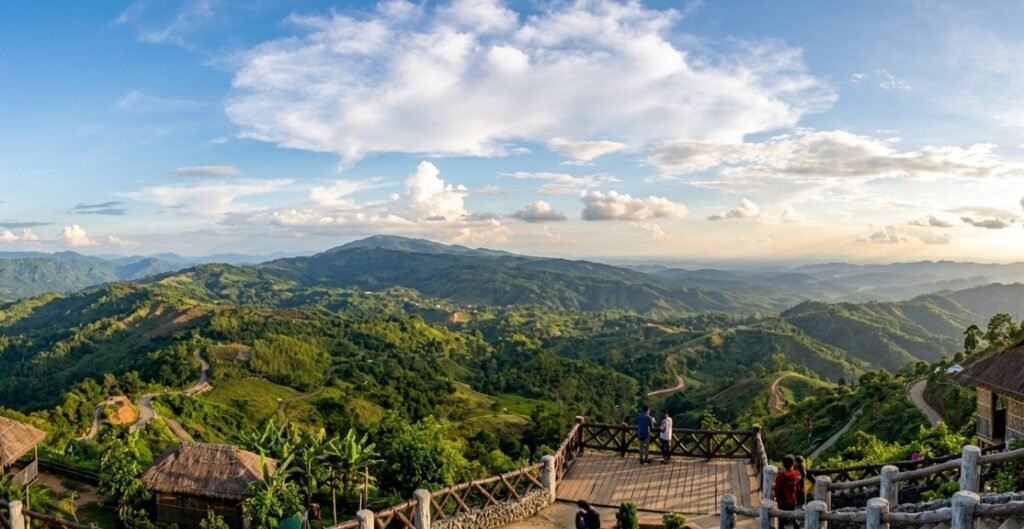
A Chittagong Hill Tracts Tour takes you into one of the most visually striking corners of Bangladesh, where rolling green hills, tribal villages, and mist-covered valleys replace the flat, familiar landscape most travelers associate with the country. Spread across Bandarban, Rangamati, and Khagrachari, this region offers a different kind of trip, built around slow travel, indigenous culture, and long-range hill views.
Anyone planning this trip quickly realizes it needs a bit more preparation than a typical weekend getaway, since permits, road conditions, and remote accommodation all play a bigger role here than they would elsewhere in the country. This guide walks through everything worth knowing before you go, from the best season to visit down to a realistic day-by-day itinerary.
Best Time for a Chittagong Hill Tracts Tour
Weather shapes this trip more than almost any other factor, and the season you pick changes what the trip actually looks and feels like.
| Season | Months | What to Expect |
| Cool & Dry (Best) | October–February | Clear skies, comfortable hiking weather, ideal for sunrise treks and valley views |
| Monsoon | June–September | Hills turn deep green, waterfalls swell, but landslides and washed-out roads are a real risk |
| Hot & Humid | March–May | Thinner crowds, but heat and humidity make long hikes uncomfortable |
October through February is widely considered the best window for a Chittagong Hill Tracts Tour, since cooler temperatures and clear skies make both the driving and the hiking far more manageable.
Top Places to Visit
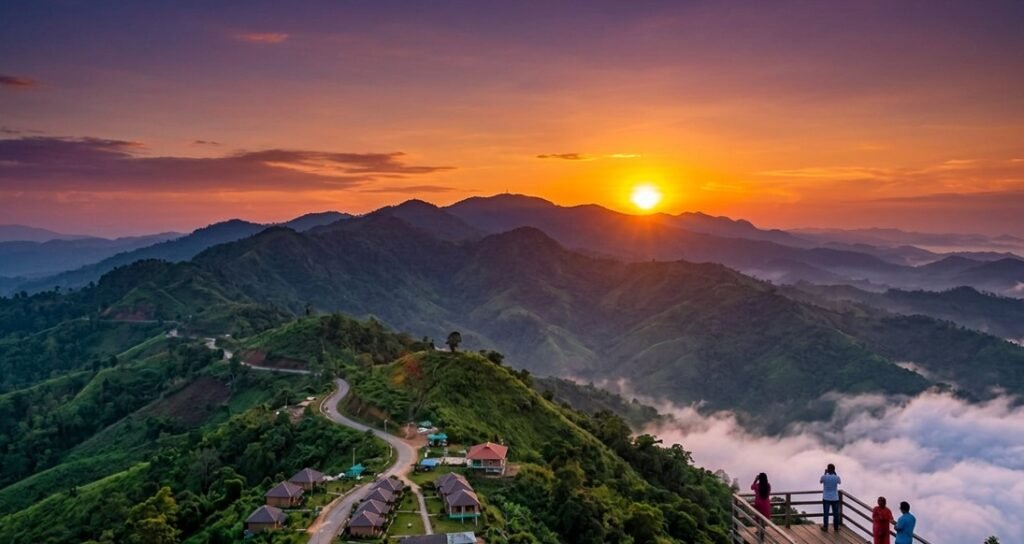
Sajek Valley, often nicknamed the “Queen of Hill Tracts,” sits at the northern edge of Khagrachari and has become the poster child for hill tracts tourism thanks to its cloud-covered ridgelines and cottages perched right on the cliff edge. Waking up there before sunrise to watch clouds roll through the valley below is the single most photographed moment of the whole trip.
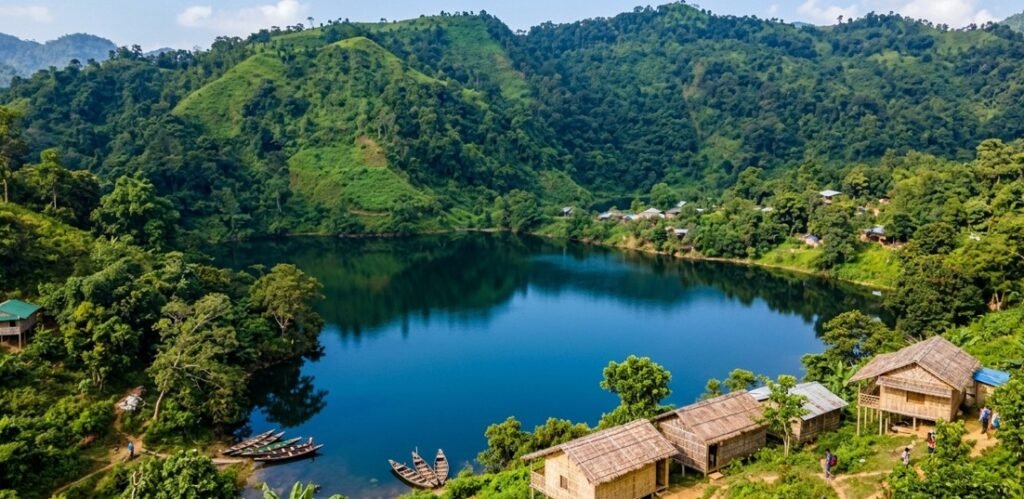
Bandarban offers a different flavor entirely, anchored by Nilgiri and Nilachal, two hilltop viewpoints that deliver panoramic views of layered hills fading into the horizon. From Bandarban, adventurous travelers push further to Boga Lake, a crater-like lake at nearly 3,000 feet, and beyond that to Keokradong, one of the country’s highest peaks, reachable only by trekking through Bawm and Khumi tribal villages.
Rangamati, meanwhile, centers around Kaptai Lake, the largest man-made lake in Bangladesh, where boat rides drift past floating markets, the hanging bridge, and small tribal settlements along the shoreline. Travelers with extra time often add the Thanchi waterfalls, Nafakhum and Amiakhum, though reaching them takes a mix of boat travel and a serious hike.
Permits and Travel Restrictions
This is where a Chittagong Hill Tracts Tour differs sharply from most other trips in Bangladesh. Certain areas within Bandarban and Rangamati require permission from local administration or army checkpoints, particularly routes toward Thanchi, Ruma, and parts near Sajek. Foreign nationals face additional restrictions and sometimes need prior approval from the deputy commissioner’s office.
For Bangladeshi travelers the process is usually quicker, often just registering at a checkpoint, but it’s worth checking current requirements since rules shift by season. Booking through a local guide who already knows the permit process saves a lot of back-and-forth once you’re on the road.
How to Reach the Hill Tracts
Getting there starts with reaching Chittagong, well connected to Dhaka by bus, train, and flight. From Chittagong city, buses and reserved CNGs head toward Bandarban, Rangamati, or Khagrachari, taking two to four hours depending on road conditions. Sajek Valley requires an extra leg from Khagrachari town by shared or reserved jeep, since the final stretch climbs steep, winding roads. Budget extra time for delays, since hill roads narrow in places and traffic backs up behind slower trucks.
Budget for a Chittagong Hill Tracts Tour
Costs vary quite a bit depending on how remote you go and which mode of transport you choose for the harder-to-reach spots. A rough breakdown across three travel styles looks like this:
| Expense Type | Budget Trip | Mid-Range | Comfortable |
| Transport (Chittagong to Bandarban/Rangamati) | ৳300–600 | ৳800–1,200 | ৳2,000+ (private car) |
| Accommodation (per night) | ৳400–700 | ৳1,200–2,500 | ৳4,000+ |
| Local transport, jeep hire (per day) | ৳1,500–2,500 | ৳3,000–4,500 | ৳6,000+ |
| Food (per day) | ৳400–600 | ৳800–1,200 | ৳2,000+ |
A 4-day, 3-night Chittagong Hill Tracts Tour covering both Bandarban and Sajek Valley typically runs ৳8,000-12,000 per person on a modest budget, or ৳18,000-25,000 for a more comfortable trip with private transport and better cottages. Splitting jeep rentals across a group of six to eight people is the easiest way to bring per-person costs down, since jeeps are one of the biggest expenses here.
Where to Stay
Accommodation ranges from simple guesthouses to cliffside cottages, and the experience differs quite a bit depending on where you base yourself. Sajek Valley cottages sit right along the ridge, offering unbeatable sunrise views but often lacking reliable electricity or hot water. Bandarban town has more conventional hotels, useful as a base before heading deeper into the hills. Rangamati leans toward lakeside resorts, several with their own boats for exploring Kaptai Lake. Booking ahead matters most for Sajek during winter weekends, when the limited number of cottages fills up fast.
Local Food and Culture
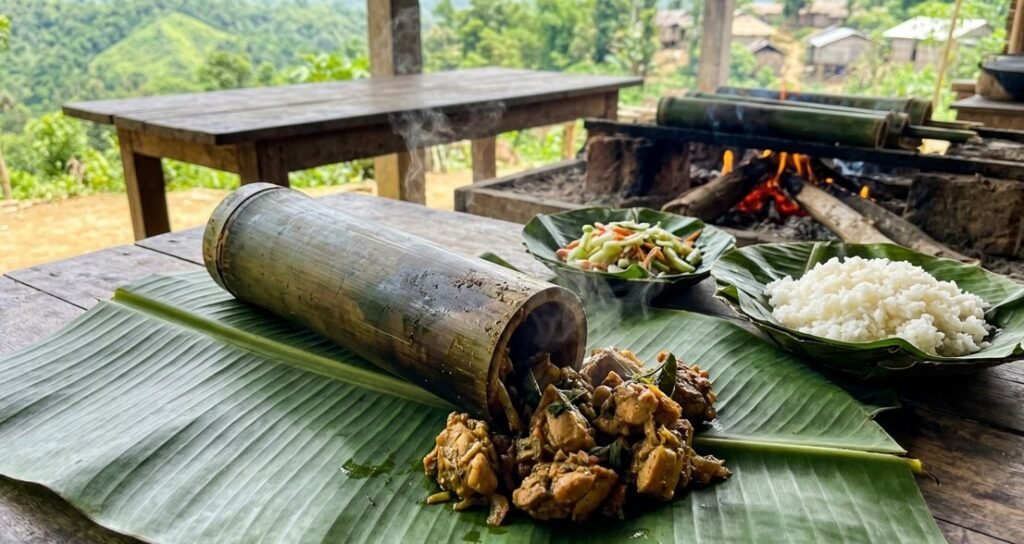
Food in the hill tracts reflects the region’s tribal heritage far more than typical Bangladeshi cuisine. Bamboo chicken, cooked inside hollow bamboo stalks over open flame, is the dish most associated with the region, and trying it at a local eatery in Sajek or Bandarban is practically a rite of passage. Pahari-style dishes often use fermented bamboo shoots and wild greens, giving the food a distinct character. Tribal markets in Rangamati and Khagrachari are worth visiting too, for handwoven textiles and a glimpse of daily life beyond the tourist trail.
A Sample 4-Day Itinerary
Day one usually involves traveling from Chittagong to Bandarban, settling into a hotel, and spending the afternoon at Nilgiri or Nilachal for sunset views. Day two is best spent at Boga Lake, with an early departure since the trek and drive together take most of the day. Day three shifts toward Khagrachari and up to Sajek Valley, arriving in time for the late afternoon light before settling into a cottage.
Day four is best spent watching sunrise over the valley before heading back down, with buffer time built in for the return journey. Travelers who want to add Rangamati and Kaptai Lake typically extend this into a 5 or 6-day trip rather than squeezing it into the same window.
Packing and Practical Tips
A few items make a real difference on a trip through this terrain:
- Sturdy trekking shoes — several of the best viewpoints and lakes require genuine hiking, not a short walk
- Warm layers — hilltop dawn temperatures drop lower than most travelers expect, even outside peak winter
- Cash — card payments and mobile banking can be unreliable once you’re away from Bandarban or Rangamati town
- A basic first-aid kit and insect repellent for the more remote stretches
- A power bank, since electricity can be spotty in cottage stays
Common Mistakes to Avoid
A handful of avoidable missteps trip up a lot of first-time visitors:
- Skipping permit checks before heading toward restricted zones, which can turn into a wasted day if you’re turned back at a checkpoint
- Underestimating travel time, since hill roads move slower than flat highways even when distances look short on a map
- Packing light on warm clothing, then regretting it while waiting for sunrise in Sajek at 4 a.m.
- Booking Sajek cottages last-minute during winter weekends, when availability disappears fast once the season picks up
Frequently Asked Questions
How many days do I need for a Chittagong Hill Tracts Tour? Four days covers Bandarban and Sajek Valley comfortably, though adding Rangamati or the Thanchi waterfalls pushes that closer to six days.
Do I need a permit for a Chittagong Hill Tracts Tour? Yes, for several routes, particularly around Thanchi, Ruma, and parts near Sajek, and foreign travelers should expect additional paperwork through local administration.
What’s the biggest expense on this trip? Jeep and local transport hire tends to be the largest cost, since many of the best spots are only reachable by reserved vehicles built for hill roads.
Is the Chittagong Hill Tracts region safe for travelers? For the most part, yes — the routes tourists actually use see steady traffic and rarely cause trouble. That said, don’t wing it on the remote treks; go with someone local who knows the trail, and check what’s happening in the area before you lock in your dates. Conditions here can shift faster than they do elsewhere in the country.
What should I pack for a Chittagong Hill Tracts Tour? Good shoes are non-negotiable — you’ll be walking more than you think. Bring something warm for the early mornings too; it catches people off guard how cold it gets before sunrise. Keep cash on hand since card machines are hit-or-miss out there, and toss in a small first-aid kit just in case.
Checklist Before You Go
- Permit requirements checked for your specific route
- Sajek cottage or Bandarban hotel booked in advance, especially for winter weekends
- Jeep or local transport arranged ahead of time
- Warm layers packed, even outside peak winter
- Enough cash carried for areas without reliable card or mobile banking
- Trekking shoes and a basic first-aid kit packed
- Travel time buffer built into the itinerary for hill road delays
Final Thought
A trip like this rewards patience more than planning perfection. Permits take a bit of legwork, the roads eat up more time than Google Maps suggests, and the good stays book out fast — none of it is complicated, it just isn’t a last-minute kind of trip. Show up prepared, though, and you get something most of Bangladesh can’t offer: valleys buried in cloud, villages that feel untouched, and a version of the country most people never see.