
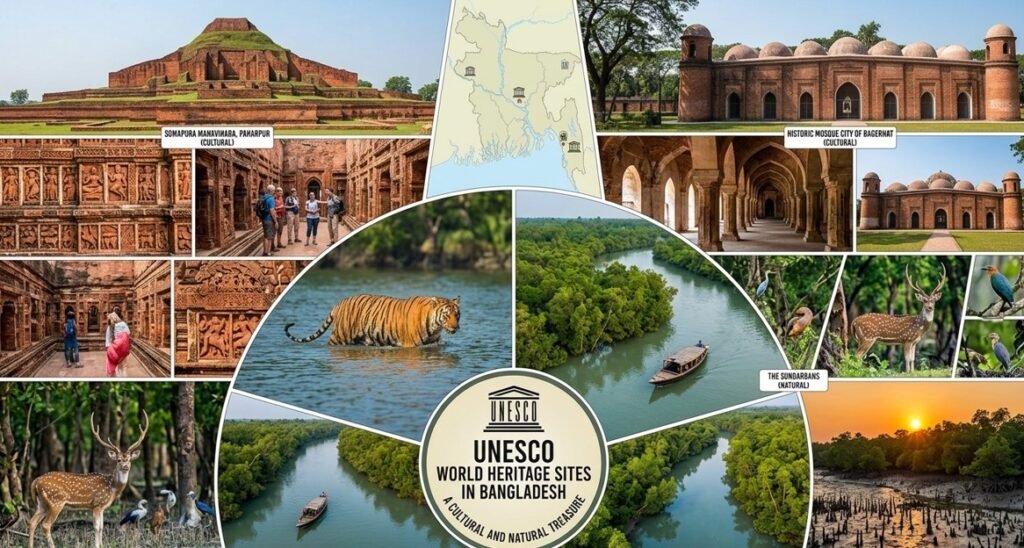
A UNESCO Heritage tour in Bangladesh takes travelers somewhere most people never expect from this part of South Asia. One day you’re gliding through the world’s largest mangrove forest. You’re tracking pug marks that might belong to a Bengal tiger. A few days later, you’re standing inside a 15th-century mosque city built almost entirely from brick.
Bangladesh holds three inscribed World Heritage properties. It also carries several entries on UNESCO’s Representative List of Intangible Cultural Heritage. Together, these cover a range of history and landscape that few countries this size manage to pack in.
This guide walks through every stop worth including on a UNESCO Heritage tour in Bangladesh. It covers what each site actually offers. It explains how to get there, when to go, what it costs, and how to string everything together into one workable itinerary.
Why This Heritage Trail Deserves More Attention
Most travelers planning a South Asia trip default to India or Nepal. Bangladesh rarely makes the shortlist. That’s precisely what makes a UNESCO Heritage tour in Bangladesh feel different from the usual circuit.
The sites here aren’t crowded. There’s no queue snaking around a monument. No selfie sticks blocking the view.
According to UNESCO’s own World Heritage List, Bangladesh’s three inscribed properties represent three completely different eras and ecosystems. One is a living wilderness. Two are ruins from empires that shaped the region centuries before Bangladesh existed as a nation.
That range alone justifies building a dedicated itinerary around them. A rushed day trip simply doesn’t do justice to any of the three.
The Sundarbans: A Living UNESCO Heritage Site
The Sundarbans stretches across the delta where the Ganges, Brahmaputra, and Meghna rivers meet the Bay of Bengal. Its inscription recognizes it as the largest single block of mangrove forest on the planet. Bangladesh holds the larger share of this forest, shared with neighboring India.
That share includes the core habitat of the Bengal tiger. This is an apex predator adapted to hunting in tidal creeks rather than open grassland.
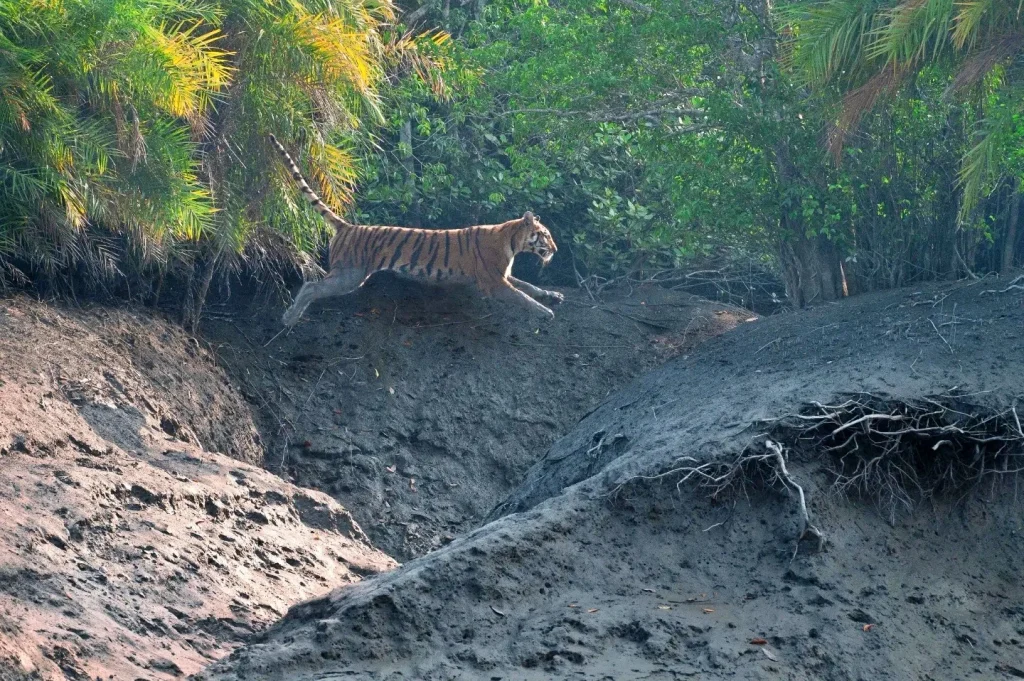
Tourist boats typically head toward Katka and Kachikhali. Spotted deer graze there in plain view of wooden observation towers. Tiger sightings stay genuinely rare, not the fake-modest kind tour operators like to claim.
But moving through a forest where an actual apex predator still rules the ecosystem sets this stop apart. It’s what makes the Sundarbans leg of any UNESCO Heritage tour in Bangladesh feel different from a routine nature reserve visit.
- Access happens by cruise vessel from Mongla or Khulna, since no roads reach the forest interior
- Wildlife highlights include the Bengal tiger, saltwater crocodile, and the Irrawaddy dolphin
- Katka and Kachikhali remain the two most visited stops inside the reserve
- Every trip requires an armed forest guard by law, arranged through the tour operator
- Multi-day cruise packages are the norm, since day trips barely scratch the surface
Historic Mosque City of Bagerhat
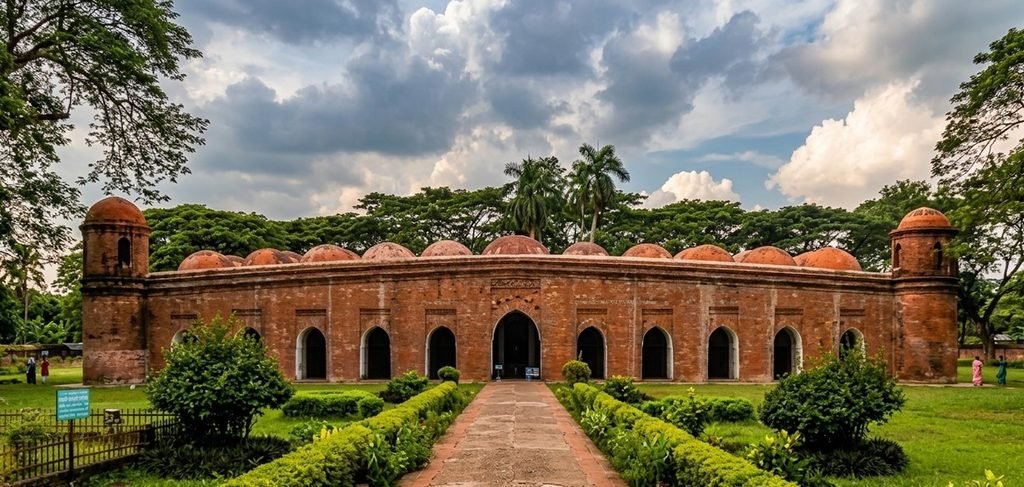
Bagerhat was founded in the 15th century by Khan Jahan Ali. He was a Turkish general and Sufi saint who governed the region under the Bengal Sultanate. The city stands today as one of the most complete examples of an early Islamic settlement built entirely from local materials, adapted for a wet, riverine landscape where stone simply wasn’t available nearby.
The centerpiece is the Sixty Dome Mosque. It actually houses 77 domes despite the name. It remains one of the largest and most architecturally significant mosques surviving from the Sultanate period anywhere in South Asia.
Beyond the mosque itself, the site includes the mausoleum of Khan Jahan Ali. There’s also a large freshwater tank he commissioned, since the surrounding groundwater ran too saline for drinking. Dozens of smaller mosques, bridges, and tanks scatter across the countryside nearby.
Brick-and-terracotta construction dominates throughout the entire site. Usable stone had to be imported from hundreds of kilometers away, which explains the material choice.
| Feature | Detail |
| Founded | 15th century, by Khan Jahan Ali |
| Centerpiece | Sixty Dome Mosque (77 domes) |
| Construction material | Brick and terracotta |
| Other notable structures | Khan Jahan Ali’s mausoleum, freshwater tank |
| Access point | Khulna or Mongla |
Somapura Mahavihara at Paharpur
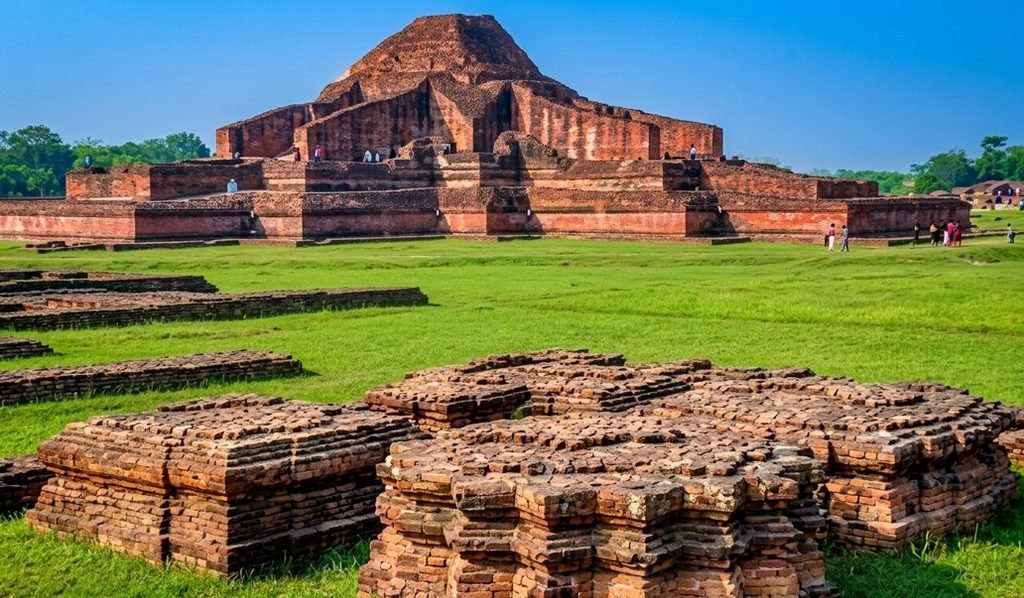
Somapura Mahavihara sits near Paharpur, in Bangladesh’s northwest. It was once among the largest Buddhist monasteries south of the Himalayas. Raised in the 8th century under the Pala dynasty, its central shrine rises in a stepped pyramidal form.
A quadrangle of monastic cells surrounds the shrine. These once housed a substantial community of monks and scholars from across the region.
What’s easy to miss here is how far this single site’s influence actually traveled. Historians tie its layout to monastery designs found as far away as Myanmar and Cambodia. Excavations at Paharpur have also turned up Buddhist, Hindu, and Jain artifacts side by side.
That mix suggests a period of genuine religious overlap rather than strict separation between faiths. There’s no real crowd at Paharpur today. Just brick foundations, terracotta plaques, and a small on-site museum.
- Built in the 8th century under the Pala dynasty, predating most European Gothic cathedrals by centuries
- The central shrine follows a stepped pyramidal design unlike anything else in the region
- Terracotta plaques throughout depict daily life, mythology, and religious narrative scenes
- The layout directly influenced monastery designs as far away as Myanmar and Cambodia
- Excavations have yielded mixed Buddhist, Hindu, and Jain artifacts from the same site
Comparing the Three World Heritage Sites
Anyone planning a UNESCO Heritage tour in Bangladesh benefits from seeing all three sites laid out side by side. It makes route planning considerably easier before committing to any single itinerary.
| Site | Region | Era | Best For |
| The Sundarbans | Southwest | Living ecosystem | Wildlife, boat travel |
| Historic Mosque City of Bagerhat | Southwest | 15th century | Islamic architecture |
| Somapura Mahavihara | Northwest | 8th century | Buddhist history, archaeology |
Notice that two of the three sites sit close together in the southwest. Paharpur, meanwhile, lies far off on its own near Rajshahi. That geography shapes almost every itinerary decision that follows from here.
Intangible Cultural Heritage Worth Seeking Out
Monuments aren’t the whole story on a heritage trip through Bangladesh. A good chunk of the country’s recognized culture is still being sung, woven, and paraded through the streets every single year.
None of it sits preserved behind glass. It’s lived, not archived.
- Baul songs — minstrel music from rural Bengal that blends Sufi philosophy with folk storytelling traditions
- Jamdani weaving — a muslin technique from around Dhaka where motifs get woven directly into the fabric, not printed afterward
- Mangal Shobhajatra — a nationwide New Year street procession recognized for its role in community identity
- Shital Pati — intricate mat-weaving from Sylhet using strips of murta cane
- Traditional Baiscopi — regional folk performance traditions still practiced in scattered rural festivals
These living traditions matter for a different reason than the stone-and-brick sites do. They’re practiced daily, not preserved as ruins behind a rope barrier.
Travelers drawn to textiles or music often find these listings lead somewhere unexpected. Workshops, weekly markets, and small local festivals never make it onto a standard sightseeing itinerary. That adds a layer most heritage trips skip entirely.
Planning Your Route
Covering all three World Heritage properties on one trip takes some geographic planning. Bagerhat and the Sundarbans sit close together in the southwest, while Paharpur lies far away near Rajshahi in the northwest.
Most travelers split their UNESCO Heritage tour in Bangladesh into two separate legs rather than one continuous loop. Trying to force everything into a single route usually wastes a full day on transit alone.
| Leg | Sites Covered | Suggested Duration |
| Southwest leg | Sundarbans + Bagerhat | 3–4 days |
| Northwest leg | Paharpur (standalone) | 1–2 days |
Bagerhat and the Sundarbans pair naturally on a single southwest-focused route. Both are reachable through Khulna or Mongla without much extra travel between them.
Paharpur works better as a standalone side trip from Rajshahi or Bogura. Its distance from the other two sites makes combining everything into one loop impractical for most schedules.
Best Time to Travel and Practical Tips
Timing matters more here than on a typical city-hopping trip. That’s mostly because of the Sundarbans, where boat access shifts heavily with the seasons and affects the rest of the itinerary too.
- The best months fall between October and March, when both river and road access are at their easiest
- Monsoon season, roughly June through September, makes Sundarbans boat travel rougher and occasionally cancels smaller trips entirely
- Guided operators familiar with the Sundarbans permit process handle the boat booking and armed-guard logistics, which independent travelers can’t easily arrange alone
- Bagerhat and Paharpur stay accessible year-round by road, so weather affects them far less than it affects the Sundarbans leg
- Basic Bengali phrases help outside Dhaka, since English fluency drops noticeably once you’re away from major cities
A little planning around these seasonal shifts prevents a lot of frustration later. Booking the Sundarbans leg first, then working the other two around it, tends to produce the smoothest schedule for any UNESCO Heritage tour in Bangladesh.
What to Pack and Budget For
A few practical items make a real difference on this kind of trip, especially given the mix of forest, brick ruins, and rural travel involved.
- Lightweight, breathable clothing works best for the humid southwest, paired with a light jacket for early morning boat rides
- Sturdy walking shoes matter more at Paharpur and Bagerhat than sandals do, given the uneven brick and stone surfaces
- Insect repellent is essential for the Sundarbans, where mosquitoes are a genuine daily presence, not an occasional nuisance
- A dry bag or waterproof pouch protects electronics during the boat legs of the trip
- Budgeting roughly five to six days total, including transit, keeps the pace realistic without feeling rushed
Frequently Asked Questions
How many UNESCO World Heritage Sites does Bangladesh have?
Three. The Sundarbans, the Historic Mosque City of Bagerhat, and the ruins of Somapura Mahavihara at Paharpur.
Can all three sites be covered on a single UNESCO Heritage tour in Bangladesh?
Yes, with planning. Most travelers combine the Sundarbans and Bagerhat into one southwest-focused leg. Paharpur then becomes a separate trip toward Rajshahi, since the distance between the two regions makes a single continuous loop impractical.
Do I need a permit to visit the Sundarbans?
Yes. Entry requires government clearance and an armed forest guard. Both are usually arranged through the tour operator handling the boat trip.
When is the best time to go?
October through March works best. Drier weather during these months makes both river access to the Sundarbans and road travel to Bagerhat and Paharpur considerably easier.
Is there more to Bangladesh’s heritage than old buildings and forest?
Yes. Baul music, Jamdani weaving, the Mangal Shobhajatra procession, and Shital Pati mat-weaving are all still actively practiced today. None of it sits preserved as a historical artifact.
How many days should a full trip take?
Around five to six days total works well for most travelers. That splits into three to four days for the southwest leg and one to two days for Paharpur in the northwest.
Wrapping Up
A UNESCO Heritage tour in Bangladesh offers a rare combination for one small country. A living mangrove wilderness, a brick-built Islamic city, and Buddhist ruins that once shaped monastery design across Asia — all within reach of a single well-planned trip.
Add in living traditions like Baul music and Jamdani weaving, and it’s clear this heritage isn’t confined to museums. It still shapes daily life today. Planning around the Sundarbans permit process and the southwest-northwest split is really all it takes to turn a rushed sightseeing trip into a UNESCO Heritage tour in Bangladesh worth remembering.