
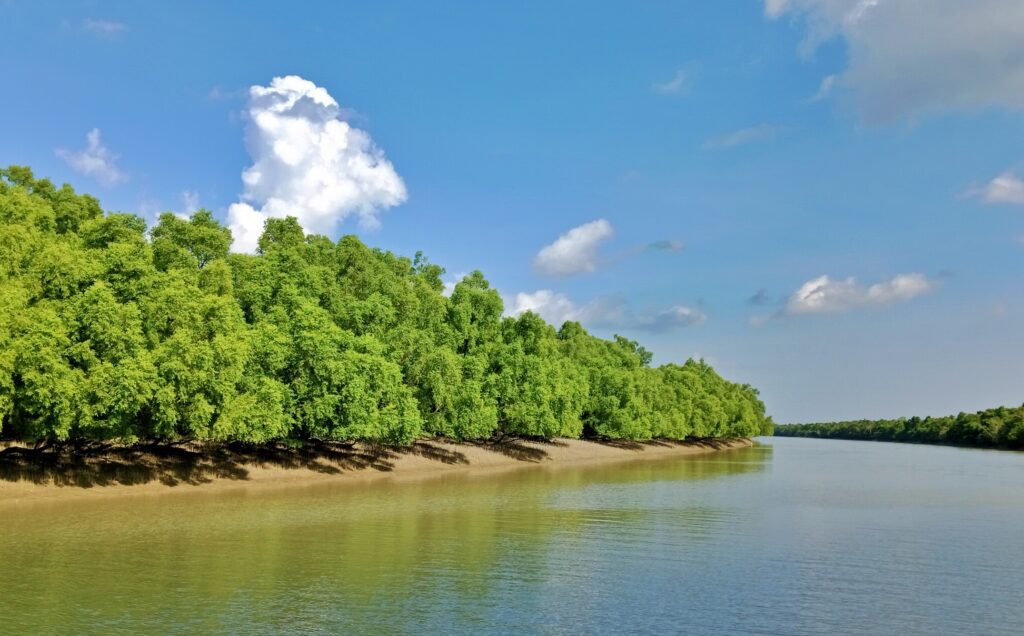
Planning a Sundarban tour Bangladesh trip is one of the best decisions a nature lover can make. The Sundarbans is the largest mangrove forest on earth, and it sits right on Bangladesh’s southern coast. This guide covers everything you need: the best time to go, how to reach the forest, permits, costs, and what to expect once you’re on the water.
A Sundarban tour Bangladesh experience is not like a normal city trip. You travel by boat through narrow tidal creeks, sleep on the river, and watch the forest change with every turn. It feels remote, quiet, and completely different from anywhere else in the country.
Why Choose a Sundarban Tour in Bangladesh
The Sundarbans covers more than 10,000 square kilometers across Bangladesh and India, and it’s a UNESCO World Heritage Site. Most of the forest lies inside Bangladesh, which makes a Sundarban tour Bangladesh package the most direct way to see it.
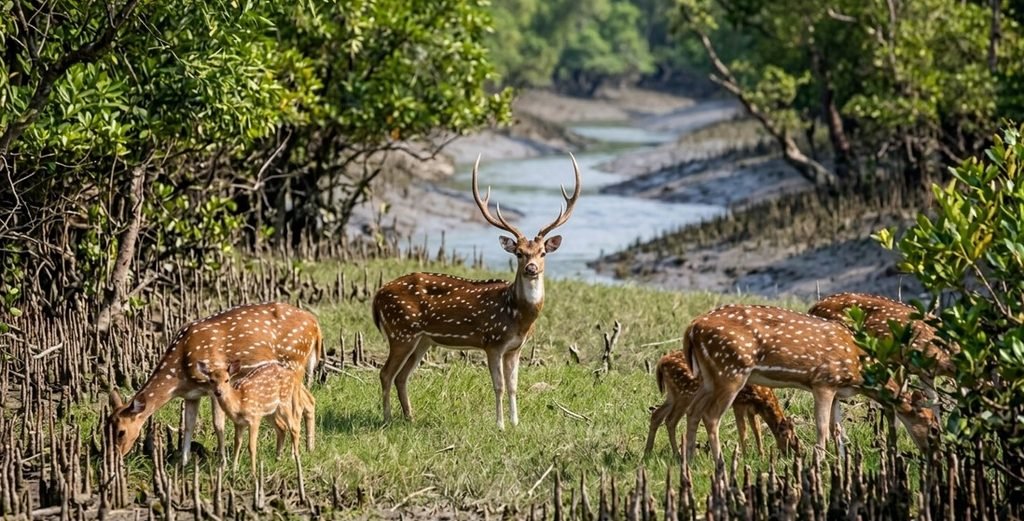
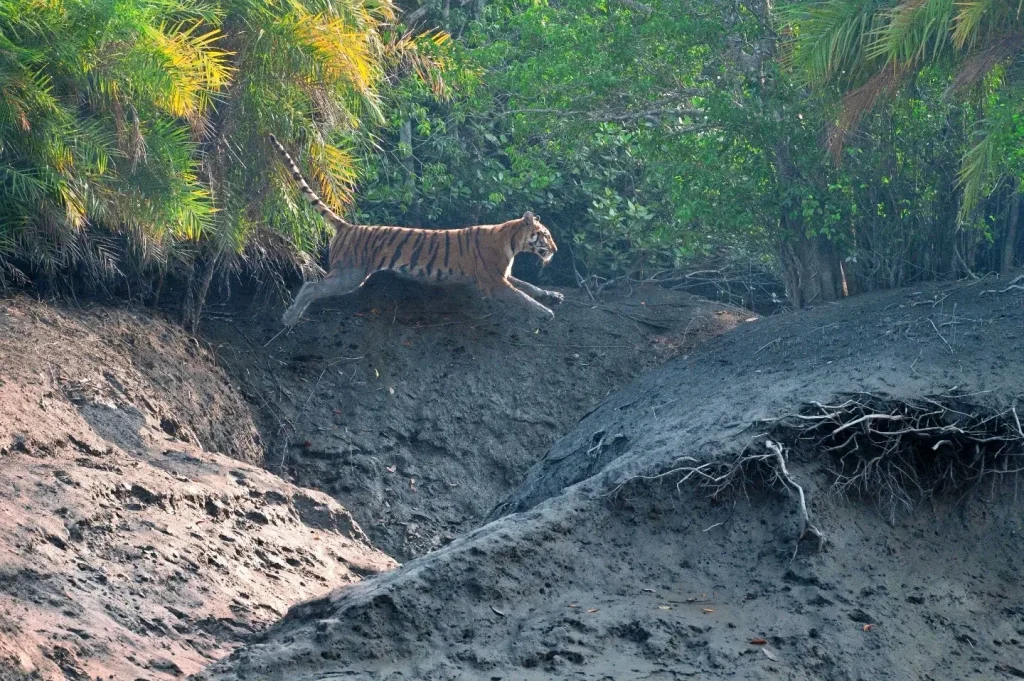
This is the only place on earth where the Royal Bengal Tiger still swims between mangrove islands. Along with tigers, you may spot spotted deer, saltwater crocodiles, wild boars, monitor lizards, and dozens of bird species. The forest also acts as a natural barrier against cyclones for coastal communities nearby — so in a way, your visit ties into something bigger than sightseeing.
People choose this trip for different reasons:
- If you’re into wildlife, this is one of the few places left where you’ve got a real shot at spotting tigers, deer, or crocodiles out in the open.
- Photographers tend to show up for the light — sunrise and sunset on the river hit different out here.
- Families and solo travelers both enjoy the slow pace and the break from city noise.
- Culture seekers get to meet local fishing communities who live along the forest edge.
- Adventure travelers enjoy the boat safaris, watchtower climbs, and open river camping.
A Moment on the Water
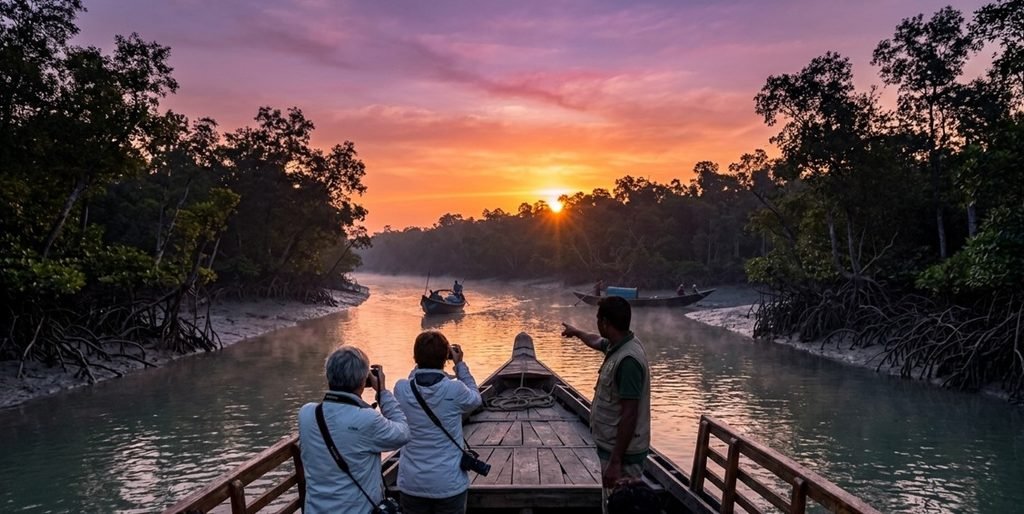
One thing that stands out in Sundarban trip photos, again and again, is this exact scene — a small wooden boat drifting quietly through a narrow mangrove channel, everyone on board suddenly still, cameras and phones raised toward the treeline. Guides tend to cut the engine at these moments, letting the boat glide on its own so the sound doesn’t scare off whatever’s just been spotted along the bank.
It’s a small window, usually early morning when the light is soft and the water is calm enough to reflect the forest back at itself. Nobody talks much. You just wait, watch, and hope whatever caught someone’s eye stays in view a few seconds longer. That brief hush — a boat full of people going quiet at once — is often the moment people remember most from the whole trip, more than any single animal they actually saw.
Best Time for a Sundarban Tour Bangladesh Trip
Timing changes everything about this trip. The forest looks and feels different depending on the season, so pick your months carefully.
The winter months, from November to February, are widely considered the best time for a Sundarban tour Bangladesh itinerary. The air is cool and dry, the sky stays clear, and wildlife sightings go up because animals gather near open water. October and March work well too — a bit warmer, but you’ll dodge the crowds.
Then there’s monsoon, June through September, when the forest turns a deep green and the rivers swell up, though heavy rain can get in the way of visibility and movement.Summer, from March to May, is hot and humid, so most tour operators see fewer bookings during this stretch.
| Season | Months | Weather | Best For |
| Winter | Nov – Feb | Cool, dry, clear skies | Wildlife sightings, comfort |
| Pre/Post-Monsoon | Oct, Mar | Mild, fewer crowds | Budget travel, photography |
| Monsoon | Jun – Sep | Wet, green, dramatic | Lush scenery, river cruising |
| Summer | Mar – May | Hot, humid | Not recommended for most travelers |
How to Reach the Sundarbans from Dhaka
Most travelers start their Sundarban tour Bangladesh journey from Dhaka. The route usually combines road or rail travel with a boat ride, since the forest itself can only be explored by water.
The common path is a train or bus ride to Khulna or Mongla, which takes around six to eight hours. From there, a chartered tourist boat carries you into the forest through Mongla Port. Many licensed tour operators arrange this entire route as one package, so you don’t need to book each leg separately. Some higher-budget travelers choose a shorter road connection to Mongla and skip the train entirely to save time.
Permits and Rules You Must Know
You cannot enter the Sundarbans on your own. Every visitor needs a permit from the Bangladesh Forest Department, and independent travel without a licensed guide is not allowed. This rule protects both the wildlife and the tourists moving through a genuinely wild ecosystem.
A trustworthy tour operator will handle your paperwork as part of the package. For overnight trips, written permission comes from the Divisional Forest Office in Khulna, while short day visits use the local forest station. The Karamjal Eco-tourism Centre near Mongla is the one exception, since it can be visited without advance permission and works well as a half-day introduction to the region.
A few rules apply once you’re inside the forest:
- Wear light, neutral-colored clothing, since bright colors can attract or disturb wildlife.
- Avoid wearing perfume or strong scents, which can alert animals to your presence.
- Stay quiet and walk together in a line while moving through watchtower trails.
- Never wander off without a forest guard or licensed guide nearby.
- Swimming in the rivers or canals is strictly prohibited, since crocodiles and strong tides make it unsafe.
Sample Itinerary and Costs
Most people go for three days and two nights on their Sundarban tour Bangladesh trip, and that’s usually the right call. You get real time in the core forest zones, a couple of boat safaris, and you’re not exhausted heading back to Dhaka. Two-day trips work fine on a tight schedule, though you’ll miss some deeper zones. Photographers and birdwatchers often stretch it to four or five days for the extra mornings.
Prices swing depending on the boat you pick. A shared, budget boat costs far less than a private one with a proper cabin, and winter trips book up fast and can cost more. Transport from Dhaka, meals, permits, and a guide are usually bundled into the package price.
| Package Type | Duration | Approx. Cost (per person) | Includes |
| Budget Group Tour | 2 days, 1 night | BDT 8,000 – 12,000 | Shared boat, meals, permit |
| Standard Tour | 3 days, 2 nights | BDT 15,000 – 25,000 | Boat cabin, meals, guide, permit |
| Private/Luxury Tour | 3–4 days | BDT 30,000+ | Private boat, premium cabin, full service |
What You’ll See and Do
A typical itinerary moves between a few key entry points, each offering something a little different.
| Entry Point | Known For | Best Activity |
| Karamjal | Easiest access point near Mongla, crocodile and deer breeding center | Half-day introduction, no advance permit needed |
| Kotka | Deep forest zone, one of the best spots for tiger and deer sightings | Watchtower wildlife scanning, early morning boat safari |
| Dublar Char | Open beach area near the Bay of Bengal | Beach walks, seasonal fishing community visits |
| Harbaria | Dense canal network close to Mongla | Narrow-creek boat cruising, birdwatching |
Most days follow a similar rhythm — boat safaris early morning and late afternoon, when wildlife tends to be out and about. Guides will often pull up at a watchtower so you can scan the mangroves for tigers or birds without even stepping off the boat. Evenings are quieter, just sitting on deck watching the sun go down before dinner shows up.
Choosing the Right Tour Operator
The Sundarbans isn’t a place where you want to cut corners on who you book with — the forest is remote, permits are mandatory, and a bad operator can ruin the whole trip. A few things worth checking before you hand over any money:
- Make sure the operator actually holds a valid Bangladesh Forest Department license — don’t just take their word for it.
- Ask who’s guiding you. A trained naturalist who knows the wildlife and the waterways makes a real difference out there.
- Take a look at the boat itself — life jackets, a working radio, basic safety gear should all be there.
- Dig up recent reviews, ideally from people who traveled the same route or season you’re planning.
- Get a clear answer on what’s actually included in the price, so nothing extra gets sprung on you mid-trip.
Frequently Asked Questions
Is a Sundarban tour Bangladesh trip safe for families?
Pretty much, yes. Licensed operators run boats set up for families — safety briefings, life jackets, experienced crew — so it works fine for kids and older travelers too.
Do I need a visa or special document besides the forest permit?
If you’re coming from abroad, you’ll need a regular Bangladesh visa on top of the forest permit. Most tour operators sort the permit out for you as part of the booking.
Can I actually see a tiger during the trip?
Don’t count on it — tigers are shy and the forest is thick, so sightings are genuinely rare. That said, winter gives you better odds since animals move closer to open water.
What should I pack for the trip?
Keep it light and neutral-colored. Bring insect repellent, comfortable shoes, something for your head, and if wildlife shots matter to you, a camera with a decent zoom.
How many days is ideal for a Sundarban tour Bangladesh package?
Three days, two nights hits the sweet spot for most people — enough time to hit a few entry points without rushing through it.
Final Thoughts
A good Sundarban tour Bangladesh trip really comes down to two things — timing and who you choose to travel with. Get the season right, go with a licensed operator, and pack light, and you’re already set up for slow mornings on the river and quiet evenings tucked away in the mangroves. It’s not the kind of trip you rush through; the whole point is letting the forest set the pace instead of your itinerary.
There aren’t many places left like this — wild, still largely untouched, sitting just a short journey from Dhaka, and genuinely worth every bit of the planning that goes into it. Whether you go for two days or five, once you’re out on that water, you’ll understand why people keep coming back.